LTL vs. FTL: Which Shipping Method is Right for Your Business?
Choosing the right shipping method can have a major impact on cost, transit time, and the amount of handling your freight requires. For many businesses, the decision comes down to LTL vs FTL.
If your freight does not fill an entire trailer, less-than-truckload shipping may be the better fit. If your shipment requires a dedicated trailer because of its handling requirements or the amount of trailer space it occupies, full truckload service may make more sense.
Understanding the differences between truckload vs less than truckload shipping can help you control costs, improve delivery performance, and choose the option that best supports your business.
What is LTL Shipping?
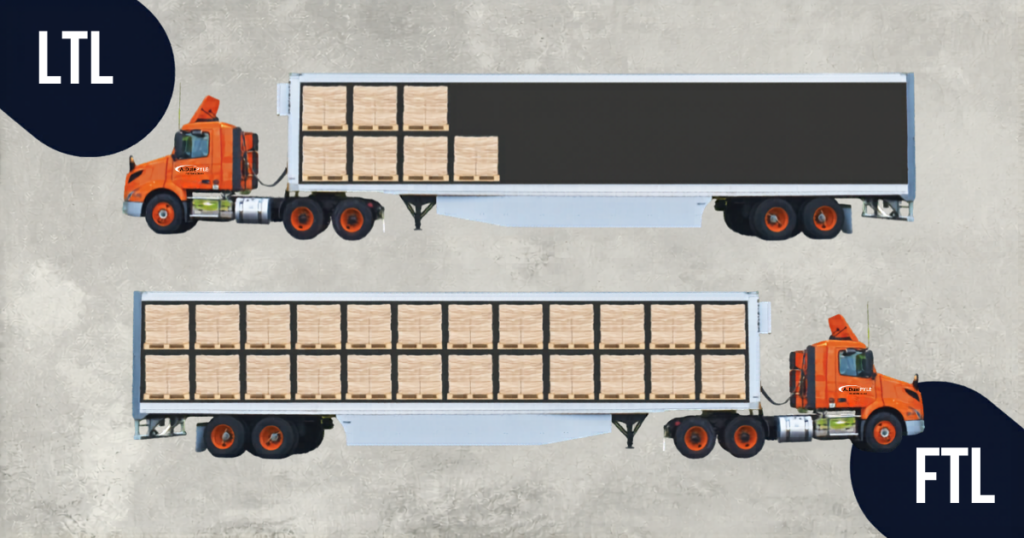
LTL, or less-than-truckload shipping, is designed for freight that does not require an entire trailer. Most LTL shipments range from one to six pallets and share space with freight from other shippers.
With LTL shipping, a carrier combines multiple shipments into one trailer. Freight is picked up from different businesses, consolidated at terminals, and then moved through the carrier’s network until it reaches its final destination.
The biggest advantage of LTL shipping is cost. Because you only pay for the portion of the trailer your freight uses, LTL is often the most economical option for smaller shipments.
LTL is often the right choice when you are shipping fewer than 10 pallets, want to reduce shipping costs, and need reliable next-day or overnight service for a smaller shipment.
What is FTL Shipping?
FTL, or full truckload shipping, means your freight occupies the entire trailer. This method is typically used for larger shipments, usually ten or more pallets, or for freight that is large enough to require a dedicated trailer.
FTL freight moves directly from the pickup location to the final destination. The trailer is dedicated to a single shipment, so there are no additional terminal stops, transfers, or added handling along the way.
The biggest advantages of FTL shipping are reduced handling, security, and control.
FTL is often the right choice when you are shipping 10 or more pallets, need a dedicated trailer, or want to minimize handling for fragile or high-value freight.
LTL vs FTL: Key Differences
For many shippers, the decision between truckload vs less than truckload comes down to four factors: shipment size, cost, handling requirements, and delivery expectations.
This freight shipping comparison can help you determine which option is the best fit for your business.
When comparing LTL vs FTL, the following factors can help you determine which shipping method is the better fit for your business.
Cost
LTL shipping is usually less expensive for smaller shipments because you only pay for the portion of the trailer you use.
FTL shipping typically costs more because you are paying for the entire trailer, even if it is not full. However, once your shipment reaches approximately 10 to 12 pallets, FTL may become the more cost-effective option.
Transit Time
Transit time is one of the biggest differences in any freight shipping comparison.
Both methods can provide fast, dependable transit when matched to the right shipment.
Regional LTL networks like Pyle’s are built to provide reliable next-day and overnight service for smaller shipments. FTL shipments move directly from pickup to delivery with no intermediate stops, making them a strong fit when a shipment requires a dedicated trailer, minimal handling, or direct control from origin to destination.
Freight Volume
The amount of freight you are shipping often determines whether truckload or less than truckload is the better choice.
LTL works best for smaller shipments that do not require an entire trailer. FTL is generally the better option for larger shipments that take up significant trailer space.
As a general rule:
- 1 to 6 pallets: LTL is typically the best fit
- 7 to 9 pallets: Either option may work depending on cost and timing
- 10 or more pallets: FTL is often the better choice
Freight Fragility
Fragile or high-value freight often benefits from FTL service because the trailer remains sealed from origin to destination. Fewer touchpoints mean less risk of damage.
LTL can still work well for durable freight that is packaged properly, but because shipments are handled more frequently, it may not be the best option for delicate or highly sensitive products.
Smaller shipments that do not require a full trailer are often best suited for LTL, while larger shipments may benefit from FTL.
In the end, the choice between LTL vs FTL comes down to the size of your shipment, how much handling it can tolerate, and whether you need shared or dedicated trailer space.
Frequently Asked Questions About LTL vs FTL
Is LTL or FTL More Cost-Effective?
LTL is usually more cost-effective for smaller shipments because you only pay for the trailer space you use. FTL often becomes more economical when your shipment is large enough to fill most of a trailer.
What Is the Difference Between Truckload vs Less Than Truckload?
The main difference is how much trailer space your shipment requires. Less-than-truckload shipping shares trailer space with other freight, while full truckload shipping uses a dedicated trailer for one shipment.
Find the Best Fit with A. Duie Pyle
At A. Duie Pyle, every shipment receives a solution built around its specific needs. Whether you need regional LTL service for smaller freight or dedicated truckload capacity for larger shipments, Pyle helps you choose the right option.
Pyle’s direct LTL network provides reliable, next-day service throughout the Northeast, Mid-Atlantic, and Ohio with no outside carriers and fewer handoffs. For larger or time-critical shipments, dedicated FTL solutions provide direct service, greater control, and faster transit.
No matter which method fits your business, Pyle helps ensure your freight arrives on time and damage-free.
You May Like

Your Home Is Ready For Winter. Is Your Supply Chain?
When severe winter weather conditions are forecasted, it is not unusual to scramblewith last-minute preparations. We run to the store for batteries and back-up energysources, fill up our gas tanks, and stockpile extra necessities all

Cross-Border Logistics That Streamline North American Supply Chains
For many supply chains that ship across the border, the problem isn’t moving the freight, it’s managing the complexity of fragmented systems. As more manufacturers bring production to Mexico, the pressure on North American supply