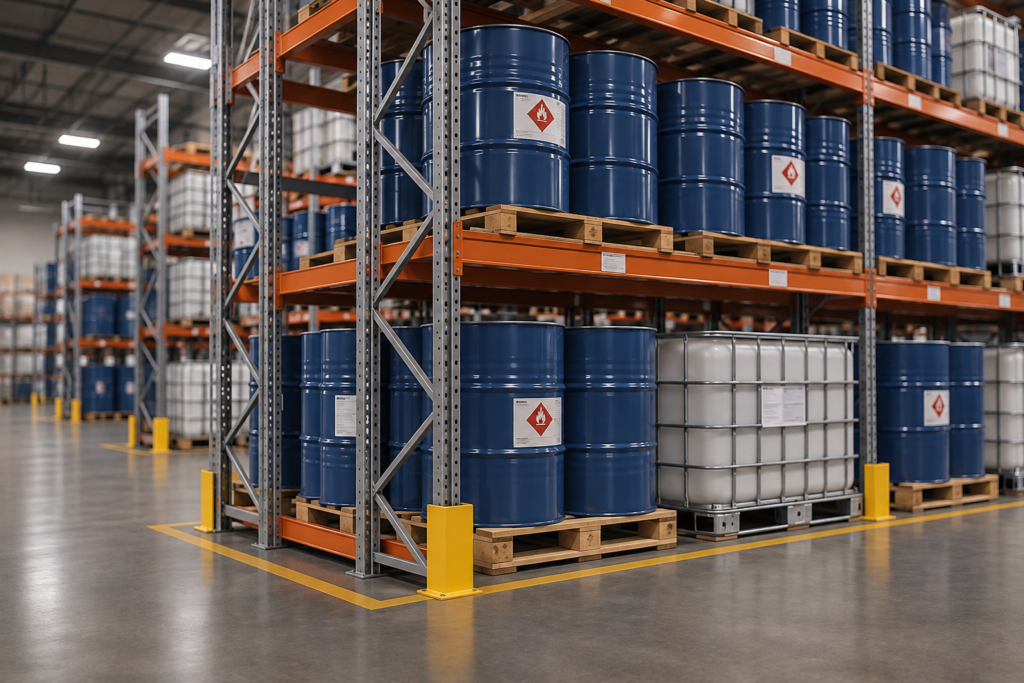
What to Look for in Hazmat Warehousing: A Guide for Chemical and Industrial Shippers
For chemical and industrial shippers, choosing a warehouse involves more than available space and convenient transportation access. Improper storage can lead to safety incidents, damaged products, regulatory exposure, and costly supply chain disruptions. The right chemical warehousing partner should understand the requirements of your specific materials and have the infrastructure, processes, and trained personnel to handle them appropriately.
When evaluating hazmat storage solutions, consider these five areas to determine whether a provider is equipped to support your operations.
1. Regulatory Compliance and Safety Standards
Hazardous materials storage can be subject to federal, state, and local requirements that vary by product, quantity, and facility. A qualified provider should be able to explain which standards apply to the materials you need to store and how its operations address them.
- OSHA requirements: Employee safety, hazard communication, access to Safety Data Sheets (SDS), and safe handling procedures.
- Fire codes and NFPA standards: Applicable requirements for fire protection, storage arrangements, and allowable quantities.
- Environmental regulations: Appropriate spill prevention, containment, and waste management procedures where required.
- Transportation requirements: Proper classification, packaging, labeling, and documentation when hazardous materials move into or out of the warehouse.
Ask prospective providers which materials they are authorized and equipped to accept, how they maintain compliance, and how they document employee training and inspections.
2. Specialized Hazmat Storage Solutions and Flammable Rooms
Certain flammable liquids require specialized storage configurations rather than general warehouse space. Depending on the product and quantities involved, these may include dedicated flammable storage rooms and engineered fire protection systems.
When reviewing a facility, ask about:
- Dedicated storage areas designed for the materials and quantities being handled.
- Appropriate fire-rated separation and fire suppression systems.
- Spill containment and procedures to prevent releases from spreading.
- Ventilation and electrical safeguards suited to the hazards present.
Not every facility is designed to store every type of hazardous material. Confirm that the warehouse’s specific capabilities align with your products and SDS requirements rather than assuming a general hazmat designation is sufficient.
3. Chemical Segregation and Inventory Management
Proper segregation helps prevent incompatible materials from coming into contact. A warehouse should have established procedures for identifying, labeling, handling, and separating products based on their hazards and compatibility.
Inventory management is equally important. Ask how the provider tracks product locations, quantities, and movements, and how it maintains accurate records. For temperature-sensitive materials, confirm whether suitable storage conditions are available and how they are monitored.
4. Employee Training and Emergency Preparedness
Specialized infrastructure is only one part of safe chemical warehousing. Employees need training appropriate to the materials they handle, and facilities need procedures for responding to spills, fires, and other incidents.
Ask potential partners how they train employees, maintain emergency response plans, conduct inspections, and coordinate with local emergency responders when appropriate. These practices help protect employees, inventory, and business continuity.
5. Integrated Warehousing and Transportation Capabilities
Chemical and industrial shippers may also benefit from a provider that can coordinate storage, inventory movement, and transportation. A. Duie Pyle’s warehousing and distribution services are designed to support these needs. Integrated services can reduce the complexity of managing multiple vendors and improve coordination between warehouse operations and outbound shipments.
Evaluate the provider’s transportation coverage, handling procedures, shipment visibility, and ability to support the particular materials you ship. If products are susceptible to freezing, ask what seasonal protection options are available for transportation.
Specialized Chemical Warehousing Solutions from A. Duie Pyle
A. Duie Pyle offers warehousing and distribution services tailored to customer requirements, including specialized capabilities for certain hazardous materials. For example, Pyle’s New Castle warehouse features a dedicated flammable storage room. Storage eligibility and requirements should be confirmed for each product and location.
Pyle also provides LTL transportation and other supply chain services that can help customers coordinate warehousing and distribution. For eligible temperature-sensitive freight, Pyle’s seasonal Protect From Freeze service provides an additional transportation option during colder months.
Find the Right Chemical Warehousing Fit
The right hazmat warehousing partner should be able to demonstrate that its facilities, personnel, and procedures match the specific needs of your products. By evaluating compliance, specialized infrastructure, material handling, emergency preparedness, and transportation coordination, shippers can make more informed storage decisions.
Contact A. Duie Pyle to discuss your chemical warehousing requirements and available specialized storage solutions.
