What is a 3PL? Third-Party Logistics Explained
A 3PL, or third-party logistics provider, is a company that manages warehousing, order fulfillment, and transportation on behalf of another business. Instead of operating its own warehouse and coordinating shipping, a company partners with a logistics specialist to handle supply chain operations.
Many companies begin considering a 3PL when growth starts to strain internal operations. Orders increase, inventory outgrows available space, and staff spend more time packing shipments than supporting customers. What once felt manageable quickly becomes a daily operational challenge.
As businesses scale, logistics often becomes the biggest obstacle to growth. Inventory must be stored properly, orders need to be processed accurately, and shipments must arrive on time. A 3PL allows businesses to outsource these responsibilities and focus on their core operations.
The Basics: Defining a 3PL
Third-party logistics refers to outsourcing supply chain functions to an external provider. Rather than managing warehouses, labor, shipping contracts, and tracking systems internally, a business relies on a partner with the infrastructure, staff, and technology already in place.
In simple terms, a 3PL becomes the operational bridge between production and final delivery, whether the shipment is going to a retail store, distribution center, or residential customer.
What Does a Third-Party Logistics Provider Do?
While services vary by provider, most 3PLs center around three primary functions: warehousing, fulfillment, and transportation.
Warehousing and Inventory Management
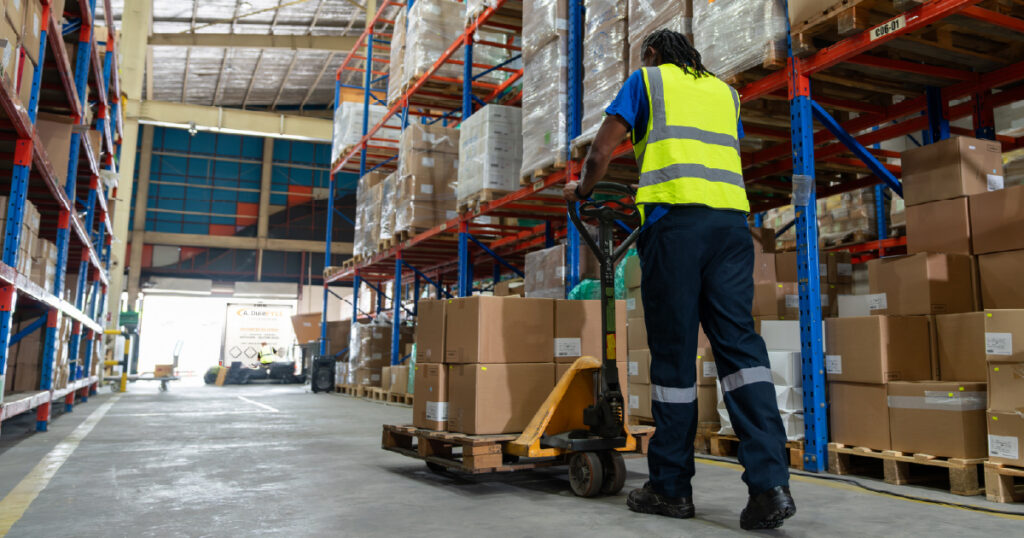
Warehousing forms the foundation of a 3PL operation. Instead of leasing and operating its own facility, a business stores its inventory in professionally managed distribution centers. A strong 3PL provides:
Strategic storage
Inventory is organized, secured, and tracked using warehouse management systems (WMS) that provide real-time visibility into stock levels and order status.
Flexible cost structure
Businesses typically pay only for the space and services they use. Storage costs rise and fall with demand, avoiding long-term leases and unused capacity.
Safety and compliance
Professional warehouses maintain structured processes, trained staff, and secure handling procedures designed to reduce product damage and loss.
Order Fulfillment (Pick, Pack, and Ship)
Once an order is placed, the 3PL warehouse team receives the order electronically and begins fulfillment. This process typically includes:
- Picking the correct items
- Packing them appropriately
- Labeling and preparing them for shipment
- Transferring them to the transportation network
Because fulfillment is standardized and supported by technology, orders are processed faster and with fewer errors than most in-house operations.
Transportation and Shipping
A 3PL also manages outbound transportation. Instead of negotiating rates, scheduling pickups, and tracking shipments individually, the business leverages the provider’s established carrier network and shipping expertise. Transportation services may include:
- Less-than-truckload (LTL) shipping
- Truckload shipping
- Retail distribution
- Final mile delivery
By consolidating freight across many customers, a 3PL provides more consistent capacity and simplified shipping management.
The Benefits of Third-Party Logistics
Many companies begin exploring outsourcing logistics when growth creates operational strain. A 3PL partnership offers several important advantages.
Focus on Core Operations
Outsourcing logistics removes daily operational responsibilities from internal teams. Instead of managing shipments and warehouse activity, companies can focus on product development, marketing, and customer relationships.
Cost Control
Operating a warehouse requires rent, equipment, labor, technology, and transportation contracts. A 3PL converts many fixed expenses into variable costs, allowing businesses to pay for logistics services only when needed.
Scalability
Demand fluctuates. Seasonal spikes, promotions, and growth periods can overwhelm internal operations. A 3PL already has infrastructure and staffing in place to absorb these changes without requiring new facilities or additional hiring.
Operational Expertise
Logistics providers specialize in supply chain operations. Their systems, trained teams, and established transportation networks improve shipping reliability and reduce delivery issues.
When Should a Business Use a 3PL?
Not every company needs a 3PL immediately. However, several signs indicate it may be time to consider outsourcing logistics:
- Storage space is full
- Orders consume significant staff time
- Shipping errors are increasing
- Delivery speed is affecting customer satisfaction
- Growth is limited by operational capacity
Once a business reaches this point, the next step is evaluating potential providers. Factors such as operational experience, network coverage, technology capabilities, and communication processes all play a role in a successful partnership. Understanding what to look for when choosing the right logistics partner can help prevent service disruptions and long-term operational issues.
How A. Duie Pyle Supports 3PL Customers
Choosing the right 3PL matters. Businesses benefit most from providers that combine warehousing, fulfillment, and transportation within one coordinated network.
A. Duie Pyle offers warehousing and distribution services supported by an expanding regional transportation infrastructure. Customers can manage storage, fulfillment, and shipping through a single logistics partner rather than coordinating multiple vendors.
With modern warehouse space, experienced operations teams, and established transportation capabilities, businesses gain operational flexibility without expanding internal resources. Whether the need is short-term storage, ongoing fulfillment, or regional distribution, a coordinated logistics solution helps reduce complexity while improving delivery performance.
Find out how Pyle’s warehousing and distribution solutions can support your supply chain strategy.
You May Like

A. Duie Pyle Named TMSA Trailblazer Award Winner!
2022 was a big year for our expansion across the region! That was highlighted by the opening of three new facilities across the Commonwealth of Virginia. This venture was no small undertaking, as the locations

Cheers! A. Duie Pyle is Now Offering Next-Day Service and Freeze Protection to Alcohol Distributors Throughout the Northeast.
The Northeast U.S. is a bustling region – and not just on the roadways. Densely populated and home to some of biggest & best cities in the world for sports, entertainment and dining, it is