LTL Regional Model
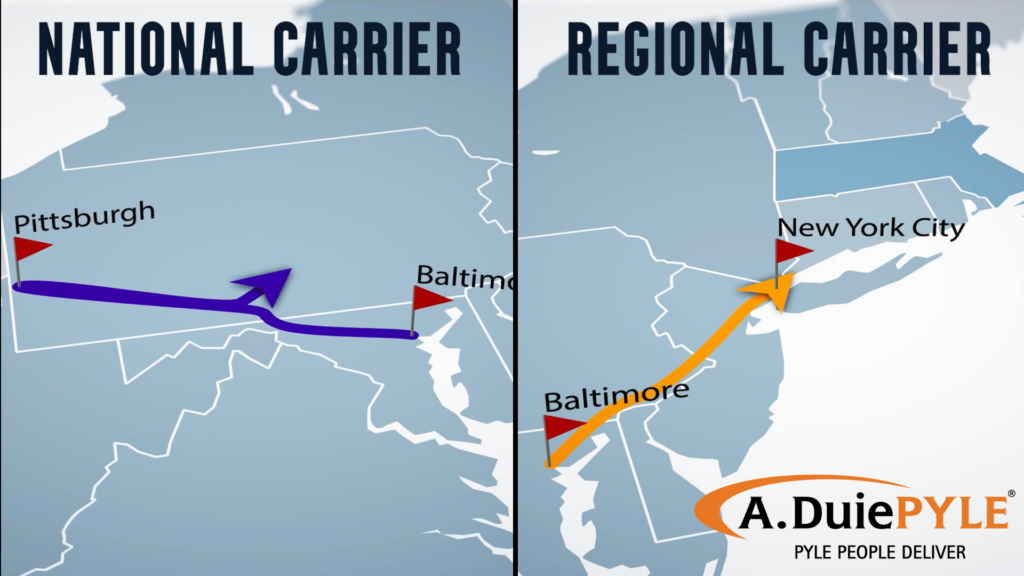
In logistics, how you move your freight matters. While national hub-and-spoke models add extra miles, handling, and risk, a regional LTL network keeps your shipments closer to your customers with fewer touchpoints, faster deliveries, and greater agility.
Discover how A. Duie Pyle’s regional network delivers the speed, flexibility, and freight protection your business needs to stay ahead.
Video Transcript
[00:00] In logistics, how you move your freight matters.
[00:04] National LTL carriers often use a hub-and-spoke model, routing shipments through a central hub before final delivery.
[00:11] This adds miles, time, and handling. More handling means more risk of damage or loss.
[00:17] Regional LTL networks function a little differently, keeping freight closer to customers with fewer stops and faster delivery, often next day.
[00:26] Fewer touch points means less chance for delays or errors.
[00:30] A regional network is more agile, able to reroute quickly around weather or disruptions, and can adapt fast when needs change.
[00:38] For speed, flexibility, and freight protection, regional wins.
[00:43] Want to explore what a regional LTL network can do for your business? Contact A. Duie Pyle today.
Pyle’s LTL Regional Model
Learn more about how our LTL Services can get your freight there safer and faster.